What Face Yoga Actually Does to Your Face
Beyond the trend: the muscles, the circulation, and the science behind a five-minute daily practice.
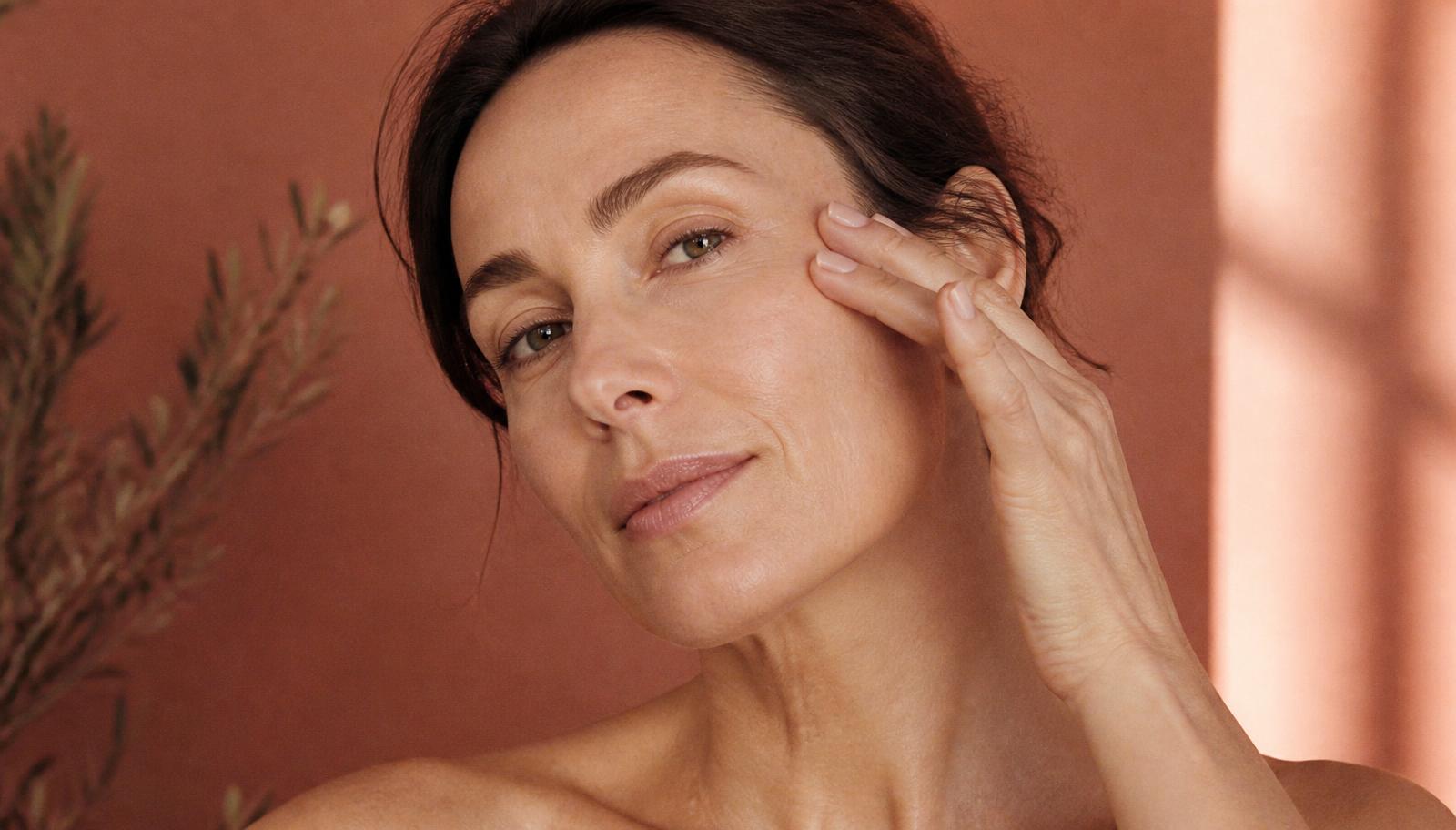
The face holds more than fifty muscles, and unlike the muscles of the body, most of them attach directly to skin rather than bone. That single anatomical fact is why face yoga works differently from any other form of exercise you have tried.
Muscle tone, not muscle bulk
When you train the face, you are not chasing size. You are restoring resting tone — the quiet baseline tension that holds the mid-face lifted and the jawline defined. Tone declines gradually from the mid-thirties onward, and it declines faster in the muscles we rarely use consciously: the cheek elevators, the muscles around the eyes, the platysma along the neck.
A well-designed sequence wakes those muscles with slow, controlled contractions and equally slow releases. Ten repetitions, held and released with intention, do more than a hundred rushed ones.
Circulation and lymph
The second mechanism is fluid. Facial massage and rhythmic movement encourage blood flow toward the skin and help move lymph away from the areas where it pools — under the eyes, along the jaw. This is why a morning practice so often reads as "less puffy" before it reads as "more lifted".
Tension release
Much of what we call an ageing face is in fact a held face: a clenched jaw, a furrowed brow, a tightened space between the eyes. Releasing those patterns softens expression lines that no cream can reach, because their cause is muscular, not topical.
What to expect, honestly
Give it eight weeks of five to ten minutes a day. Most people notice reduced puffiness within two weeks, softer tension lines by week four, and a change in the way light falls across the cheekbones by week eight. Face yoga is a wellness ritual, not a medical treatment, and results vary from person to person.
Start with clean hands, a mirror, and a slow breath. That is the whole entry fee.
This journal is a wellness resource, not medical advice. It is not a substitute for professional diagnosis or care.
Explore the practice