Ayurvedic Skincare, Without the Mystique
Warm oil, seasonal eating, and gentle rhythm: the practical core of an ancient tradition.
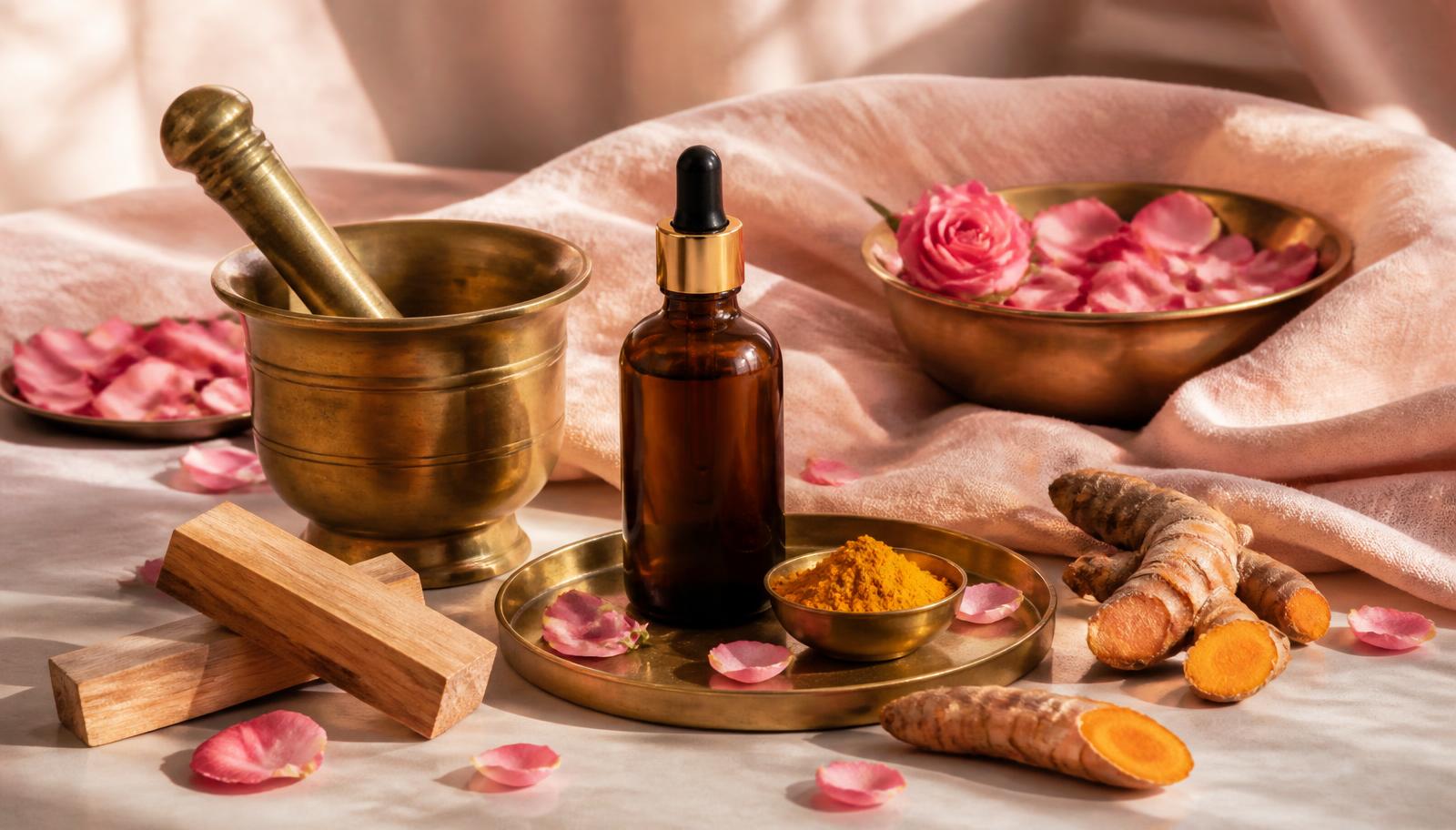
Ayurveda is often presented as either mystical or medicinal. In daily life it is neither — it is a set of practical habits built around warmth, rhythm and digestion.
Abhyanga: the oil ritual
Self-massage with warm oil is the tradition's most enduring practice. Sesame oil for cooler months, coconut for warmer ones. Warm a small amount in the palms, then work it into the face and neck with upward, circular strokes for three to five minutes before bathing.
The mechanical benefit is real: sustained, warm contact relaxes the facial muscles and encourages circulation. The ritual benefit matters just as much — a few unhurried minutes of self-touch reliably lowers the tension the face carries all day.
Digestion first
Ayurveda treats the skin as a mirror of digestion. The practical translation is unglamorous and effective: warm food over cold, cooked over raw when digestion is weak, a genuine gap between meals, and water sipped warm through the day rather than in cold gulps.
Seasonal adjustment
The same routine should not run unchanged through the year. Dry, cold months ask for heavier oils and more hydration. Hot months ask for lighter oils, cooling ingredients such as rose and sandalwood, and less exfoliation than you think.
What to leave behind
Not everything traditional deserves to survive. Harsh scrubs, lemon juice on the face, and undiluted essential oils damage the skin barrier regardless of their heritage. Keep the warmth, the rhythm and the restraint. Leave the abrasion.
The through-line
Ancient practice and modern formulation science agree on more than they disagree: protect the barrier, reduce inflammation, stay consistent. Everything else is detail.
This journal is a wellness resource, not medical advice. It is not a substitute for professional diagnosis or care.
Explore the practice